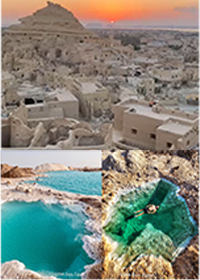
| Siwa Oasis, Egypt
Siwa Oasis is a beautiful and remote oasis located in Egypt’s Western Desert, near the Libyan border. Surrounded by palm trees, salt lakes, and sand dunes, it is famous for its natural beauty and unique culture. The people of Siwa, known as the Siwans, have their own language and traditions that differ from the rest of Egypt. The oasis is also home to the ancient Temple of the Oracle of Amun, visited by Alexander the Great. Today, Siwa attracts visitors for its peaceful atmosphere, hot springs, and stunning desert landscapes. |
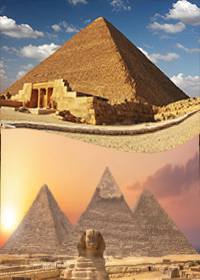
| The Great Pyramid of Giza
The Great Pyramid of Giza, built for Pharaoh Khufu around 2580–2560 BCE, is the largest of the Giza pyramids and the only surviving Wonder of the Ancient World. Constructed over approximately 20 years, it served as Khufu’s royal tomb and a powerful symbol of ancient Egypt’s engineering skill and political authority.
Key Facts
Builder: Pharaoh Khufu (Fourth Dynasty)
Age: Over 4,500 years old
Original Height: 146.5 meters (481 ft)
Current Height: Approximately 138.8 meters (455 ft)
Status: Tallest man-made structure in the world for over 3,800 years
|
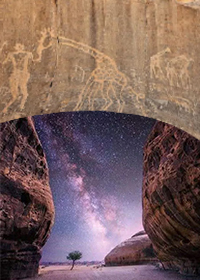
| Tassili n'Ajjer, Algeria
Tassili n'Ajjer is a vast plateau in southeastern Algeria, famous for its prehistoric cave art. The site contains thousands of rock paintings and carvings that date back over 10,000 years, showing animals, people, and scenes of daily life from ancient times. These artworks reveal how the Sahara once had rivers, forests, and wildlife before it became a desert. Tassili n'Ajjer is a UNESCO World Heritage Site and is considered one of the most important rock art collections in the world, offering a window into early human civilization in North Africa. |
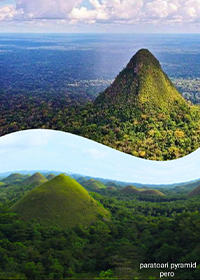
| Paratoari Pyramids, Peru The Paratoari Pyramids, also known as the “Pyramids of Paratoari,” are mysterious, pyramid-shaped formations located deep in the remote Peruvian Amazon jungle. First spotted in satellite photos in the 1970s, they appeared to be man-made structures, sparking interest among explorers and archaeologists. However, later studies suggest they may be natural sandstone formations shaped by erosion. Despite this, the Paratoari Pyramids remain a fascinating site that continues to inspire curiosity and adventure, blending mystery, nature, and the spirit of exploration in the heart of the Amazon.
|
| Machu Picchu, Peru Machu Picchu is an ancient Inca city located high in the Andes Mountains of Peru. Built in the 15th century under the rule of Emperor Pachacuti, it served as a royal estate or religious site. Hidden in the mountains and surrounded by stunning scenery, it was unknown to the outside world until its rediscovery in 1911 by Hiram Bingham. The site features impressive stone architecture, temples, terraces, and plazas that show the Inca’s advanced engineering skills. Today, Machu Picchu is one of the most famous archaeological sites in the world and a UNESCO World Heritage Site.
|
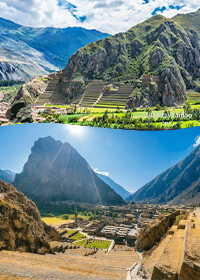
| Ollantaytambo, Peru Ollantaytambo is an ancient Inca fortress and town located in the Sacred Valley of Peru. It was a royal estate of Emperor Pachacuti and later served as a stronghold during the Spanish conquest. The site features impressive stone terraces built into the mountainside, massive walls, and finely crafted temples that demonstrate the Incas’ remarkable engineering and architectural skills. Ollantaytambo also remains a living town, with streets and buildings that still follow the original Inca layout, making it one of the best-preserved examples of Inca urban planning.
|
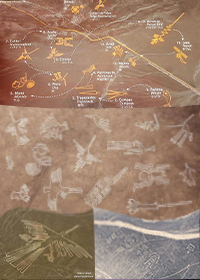
| Nazca Lines, Peru The Nazca Lines are a series of mysterious geoglyphs etched into the desert floor of southern Peru. Created by the Nazca culture between 500 BCE and 500 CE, these enormous designs include shapes of animals, plants, and geometric patterns that can only be fully seen from the air. The purpose of the lines remains uncertain—some theories suggest they were related to astronomy, water rituals, or spiritual beliefs. Despite their age, the Nazca Lines are remarkably well preserved due to the dry climate, and they are recognized as a UNESCO World Heritage Site for their cultural and historical importance.
|
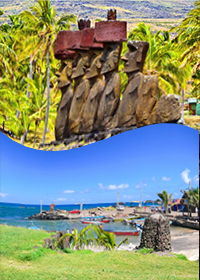
| Easter Island, Chile Easter Island, known locally as Rapa Nui, is a remote island in the Pacific Ocean belonging to Chile. It is world-famous for its giant stone statues called Moai, created by the Rapa Nui people between the 13th and 16th centuries. These statues, with their large heads and solemn faces, were carved from volcanic rock to honor important ancestors and chiefs. The island’s mysterious past, unique Polynesian culture, and dramatic landscape make it one of the most fascinating archaeological sites on Earth. Today, Easter Island is a UNESCO World Heritage Site and a symbol of human creativity and resilience.
|
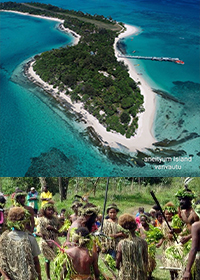
| Aneityum Island, Vanuatu Aneityum Island is the southernmost island of Vanuatu, known for its ancient megalithic sites and natural beauty. The island is home to large stone structures and carvings that reflect the rich cultural history of its early inhabitants. These megalithic remains suggest that Aneityum was once an important center for ritual and community gatherings. Surrounded by clear waters, coral reefs, and lush forests, the island combines archaeological significance with stunning scenery. Today, Aneityum is a peaceful place where visitors can explore traditional Melanesian culture and the island’s fascinating ancient heritage.
|
,%20Myanmar%2010x14,100.jpg)
| Pyay (Sri Ksetra), Myanmar Sri Ksetra, located near the modern town of Pyay in Myanmar, was the ancient capital of the Pyu Kingdom, which flourished between the 5th and 9th centuries CE. It is one of the earliest urban settlements in Southeast Asia and played a key role in spreading Buddhism in the region. The site contains impressive remains such as city walls, ancient stupas, monasteries, and inscriptions written in the Pyu script. Recognized as a UNESCO World Heritage Site, Sri Ksetra provides valuable insight into early Burmese civilization and the cultural connections between India and Southeast Asia.
|
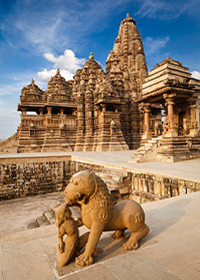
| Khajuraho Temples, India The Khajuraho Temples are a group of magnificent Hindu and Jain temples located in Madhya Pradesh, India. Built between the 9th and 11th centuries by the Chandela dynasty, these temples are famous for their stunning architecture and intricate stone carvings. The sculptures depict gods, goddesses, mythical creatures, and scenes from daily life — as well as the famous erotic figures that symbolize divine love and human passion. Once home to around 85 temples, only about 25 remain today, beautifully preserved. The Khajuraho Temples are a UNESCO World Heritage Site and a masterpiece of Indian art and spirituality.
|
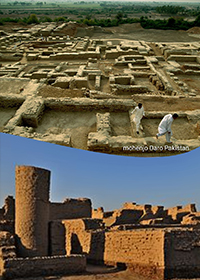
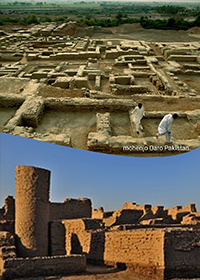
| Mohenjo-daro, Pakistan Mohenjo-daro, located in the Sindh province of Pakistan, was one of the major cities of the ancient Indus Valley Civilization, dating back to around 2500 BCE. It is renowned for its advanced urban planning, including well-laid streets, sophisticated drainage systems, and impressive public buildings. The city reflects the high level of social organization and engineering skill of its inhabitants. Mohenjo-daro is a UNESCO World Heritage Site and remains one of the most important archaeological sites for understanding early urban life in South Asia.
|
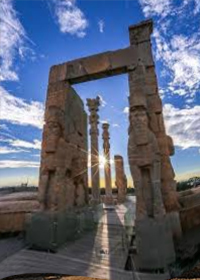
| Persepolis, Iran Persepolis was the ceremonial capital of the Achaemenid Empire, founded by Darius I around 518 BCE in present-day Iran. The city is famous for its grand palaces, monumental staircases, intricate reliefs, and massive columns that showcase the artistic and architectural achievements of the ancient Persians. Persepolis served as a symbol of imperial power and a center for festivals, particularly the Persian New Year. It was largely destroyed by Alexander the Great in 330 BCE but remains a UNESCO World Heritage Site and a key testament to ancient Persian civilization.
|
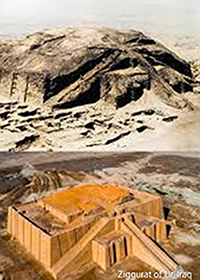
| Ziggurat of Ur, Iraq The Ziggurat of Ur is a massive ancient temple complex located near Nasiriyah in southern Iraq. Built around 2100 BCE during the reign of King Ur-Nammu of the Sumerian civilization, it was dedicated to the moon god Nanna. The structure is a terraced step pyramid made of mud-brick, featuring multiple levels and a grand staircase leading to the temple at the top. The ziggurat served both religious and administrative purposes and symbolizes the architectural and engineering skills of the Sumerians. Today, it remains one of the best-preserved examples of Mesopotamian monumental architecture.
|
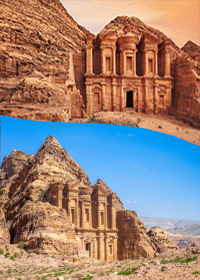
| Petra, Jordan Petra is an ancient city in southern Jordan, famously carved into red sandstone cliffs. It was the capital of the Nabataean Kingdom around the 4th century BCE and became a major trading hub connecting Arabia, Egypt, and the Mediterranean. Petra is renowned for its rock-cut architecture, including the iconic Treasury (Al-Khazneh), tombs, temples, and an impressive water management system. Hidden for centuries, it was rediscovered in the 19th century and is now a UNESCO World Heritage Site and one of the New Seven Wonders of the World, celebrated for its historical and architectural significance.
|
|